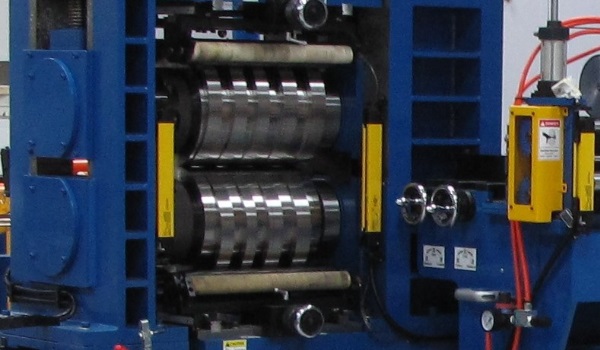
What is the Metal Slitting Machine?
The specific machine that is used for the purpose of roll slitting is known as the metal slitting machine, a slitter, or a slitter rewinder. These different names can be used interchangeably when referring to the same machines. Also referred to as rewind slitting or log slitting, roll slitting is a type of shearing operation that can cut large rolls of materials into narrower coils. The term log slitter is in reference to those days in the past when sawmills were used for cutting huge log pieces into smaller chunks. These sawmills were also used for cutting bigger iron rods to relatively smaller sections.
What is Slitting?
Slitting is a process in which a roll of material is cut into narrower rolls or strips. The potential workpieces are noticeably thin measuring only at 0.001 up to 0.215 inch. These can also be machined in the form of sheets or rolls.
It is often used in the manufacturing of paper, metal, plastic, and textile products. Slitting can be performed using a variety of different types of machines, including rotary metal slitting machines, which use a rotating blade to cut the material, and razor metal slitting machines, which use a series of very thin, sharp blades to cut the material. The width and number of strips produced during the slitting process can be adjusted by changing the size and number of cutting blades used. Slitting is often used as a finishing step in the production of many types of products, such as adhesive tapes, labels, and packaging materials.
What does the Metal Slitting Machine consist of?
The machine typically consists of the following components:
- Unwinder: This is the portion of the machine that holds the roll of material that is to be slit.
- Guiding system: This system helps to guide the material as it is being unwound, ensuring that it stays straight and centered.
- Cutting system: This is the portion of the machine that actually cuts the material. The cutting system can consist of a variety of different types of blades or knives.
- Rewinder: This is the portion of the machine that winds the cut material into smaller rolls.
- Control panel: This is the portion of the machine that allows the operator to control the speed and width of the slit.
- Safety guards: These are in place to protect the operator from the moving parts of the machine.
Functions of Metal Slitting Machines
The primary function of a metal slitting machine is to take a large roll of material and cut it into smaller rolls of a specific width. Some specific functions include:
- Cutting rolls of material into smaller, narrower rolls of a specific width.
- Winding the cut material into smaller rolls.
- Accurately controlling the width of the slit to ensure it meets specifications.
- Operating at high speeds to increase productivity and efficiency.
- Handling a variety of different materials, including paper, plastic, fabric, and more.
- Ensuring the safety of the operator by using guards and other safety features.
4 Common Industries that use Slitting Machine
Metal slitting machines are used in a variety of industries:
- Paper and packaging industry: Used to cut rolls of paper or film into narrower rolls or sheets.
- Metals industry: Used to cut sheet metal into narrower strips.
- Textiles industry: Used to cut fabrics into narrow strips or ribbons.
- Plastics industry: Used to cut plastic films and sheets into narrower rolls.
Types of Slitting Machines
There are different types of slitting machines available, the most common include:
- Loop Slitting Machines: Used for processing softer materials like paper or film with a loop control system.
- Pull-Through Slitting Machines: Used for processing harder materials like metals using powered rollers.
- Rotary Shear Slitting Machines: Utilizes a set of rotating knives or blades for the cuts.
- Crush Cutting Machines: Used for cutting softer materials like foam or rubber by crushing them against a roller.
- Razor Blade Slitting Machines: Uses sharp, razor blades mounted on a rotating shaft.
Conclusion
Key factors to evaluate a slitting machine include Accuracy, Speed, Ease of use, Durability, Safety, and Customer support. By evaluating these factors, you can determine whether a slitting machine meets your specific requirements. We are the supplier of metal slitting machine in Taiwan.
If you have any questions.
Since 1972, SlitterLine has specialized in precision slitting equipment, offering expert consultation,
OEM customization, and comprehensive knife grinding services.